From Silicone Device Case to Accessory Platform: Designing a Coordinated Product Ecosystem
Learn how to design a silicone device case as part of a coordinated accessory platform, including shared interfaces, straps, wallets, color systems, material combinations and validation.
From Silicone Device Case to Accessory Platform: Designing a Coordinated Product Ecosystem
Secondary Keywords: custom silicone device case, silicone case product development, silicone accessories design, silicone overmolding, silicone plastic overmolding
A Critical Question for Product Teams & Engineering Directors:
Should a silicone device case be engineered as a standalone protective shell — or as the core attachment platform for a multi-material accessory ecosystem?
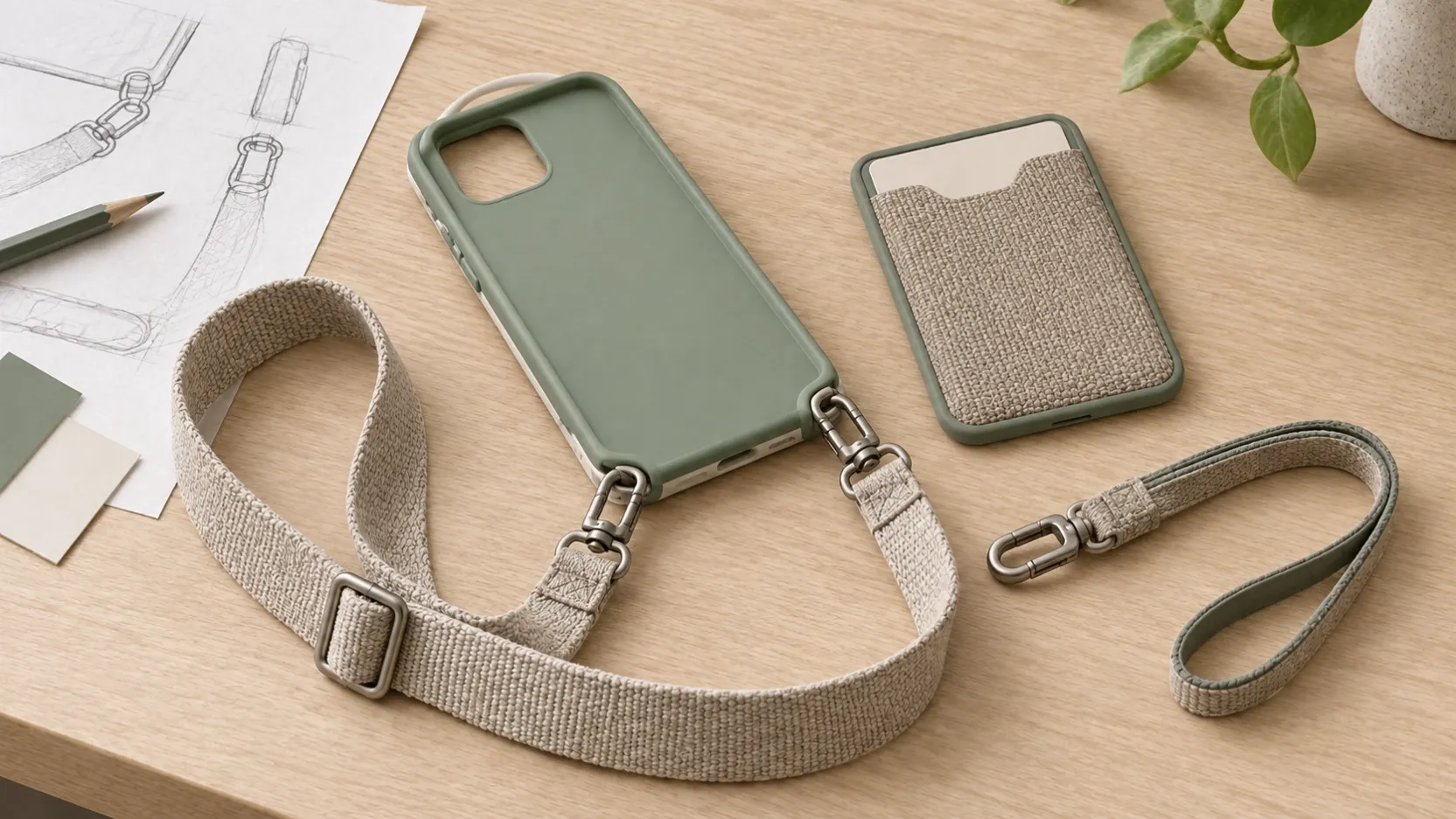
A device case no longer needs to be an isolated SKU. When planned strategically, a single molded case becomes the foundational hub for an expandable product family comprising crossbody straps, wrist lanyards, magnetic wallets, clips, and wearable attachments.
In consumer electronics and licensed merchandise programs, Apple's iPhone 18 Pro lineup demonstrated this exact strategy: launching silicone cases alongside coordinated TechWoven cases, straps, and FineWoven wallets built around shared attachment interfaces and cross-material color families. The major takeaway for industrial designers and mechanical engineers isn't just the individual accessories—it's the underlying platform engineering defined before cutting the first steel mold.
1. Start With the Ecosystem, Not Just the Single Case
Should your engineering team optimize strictly for a single case geometry, or design a multi-generational attachment architecture?
When a case is developed as a standalone product, engineering focus remains narrow: device fit, drop protection, grip, button actuation force, and camera bump clearance. However, when treated as an ecosystem anchor, critical DFM questions emerge before tooling:
- Will users attach high-tensile wrist or crossbody straps to this case later?
- Will the brand launch detachable magnetic wallets, cardholders, or character IP charms?
- Can the same mechanical connection interface be shared across multiple device sizes?
- How will silicone color formulations match woven fabrics, plastics, and anodized hardware?
2. Define Shared Interfaces Before Tooling
What should be locked down before cutting steel: the base mold layout, or the universal accessory attachment interface?
Designing a shared interface allows product teams to launch new attachments over 2-3 product cycles without re-engineering the primary case mold. However, attachment points cannot simply be added wherever space allows after initial prototyping. Key engineering constraints include:
- Load Direction & Vectors: How forces travel during active use (e.g., dynamic tugs on a crossbody strap).
- Multi-Material Insertion: Managing tolerances between soft silicone, rigid PC/ABS skeletons, and metal hardware.
- Retention & Engagement: Ensuring intuitive snap-fit or latching mechanisms that resist accidental detachment under load.
3. Silicone Should Not Carry High Structural Loads Alone
When does pure silicone molding fail under mechanical tension, and when must you introduce a rigid structural skeleton?
Silicone elastomeric materials provide superior tactile comfort, impact absorption, and a soft-touch finish. However, soft silicone (30A–60A Shore A) lacks the shear strength to sustain repeated dynamic forces on thin attachment eyelets or strap loops.
For load-bearing attachment zones, engineers should evaluate:
- Silicone-Overmolded Rigid Inserts: Encapsulating hard PC or metal anchors within the silicone body to distribute tensile stress.
- Mechanical Interlocking Features: Molding undercut channels that lock rigid structural loops directly into the main frame.
- Reinforced Anchor Geometry: Increasing localized wall thickness to prevent tear propagation.
4. Design the Complete Load Path, Not Just the Loop
Where does the mechanical force travel after a user pulls forcefully on a connected crossbody strap?
Simply adding a cutout or loop to a silicone edge does not create a reliable strap connection. DFM reviews must map the entire structural chain: Strap → Metal Connector → Internal Reinforcement → Case Frame → Device Fit.
Critical Structural Checkpoints During DFM:
- Is stress concentrated entirely on unreinforced silicone walls?
- Can the internal overmolded insert shift or delaminate during off-axis pulling?
- Will repeated strap friction enlarge molded openings over time?
- Does the internal anchor push against the device surface, causing cosmetic scratches?
5. Build Compatibility Across Product Families
Should each device variant have its own unique attachment hardware, or should you standardize components across the entire line?
If every device model uses a different connection geometry, brands face inventory fragmentation, duplicated tooling costs, and complex assembly workflows. Standardizing attachment hardware across multiple SKUs streamlines manufacturing and supply chain management.
6. Treat Color as a Multi-Material System
How do you achieve precise color harmony when matching molded silicone against woven fabrics, hard plastics, and painted metals?
A Pantone color matched perfectly in liquid silicone rubber (LSR) will appear noticeably different when applied to a woven polyester strap or an anodized aluminum buckle due to light reflection and material translucency. The goal is visual coordination across the complete kit, validated through standardized lighting environments (D65) during masterbatch compounding.
7. Plan Silicone + Plastic + Metal + Textile Assembly Together
Should you source individual accessory components separately, or evaluate the fully assembled multi-material stack from day one?
Device accessory ecosystems are inherently multi-material. Managing silicone molding, plastic structural inserts, metal hardware, and textile webbing independently creates significant fit and tolerance risks. A successful platform development requires holistic DFM covering assembly tolerances, overmolding temperature constraints, and unified AQL inspection standards.
8. Validate the Complete System, Not Just Isolated Parts
Why can a silicone case pass standalone dimensional checks and still fail during retail use?
A silicone part might meet all CAD dimensions, but fail when combined with straps and hardware under real-world conditions. Mechanical validation must evaluate the integrated system:
- Tensile & Pull Testing: Subjecting strap attachment points to minimum 50N–100N pull forces.
- Dynamic Twist & Off-Axis Loading: Simulating accidental snagging from unexpected angles.
- Cycle & Wear Testing: Executing 1,000+ attachment/detachment cycles to verify retention tolerances.
- System Drop Testing: Verifying device protection when dropped with attached accessories.
9. Manage Multi-SKU Complexity Without Supply Chain Chaos
How can you offer extensive color and strap combinations without creating unmanageable inventory exposure?
Combining 3 case models, 6 silicone colors, and 4 strap styles quickly yields dozens of unique SKUs. Implementing late-stage customization—where standardized core components are molded and held in stock, then assembled into custom retail-ready packaging based on demand—helps optimize inventory turnaround.
10. What to Finalize Before Opening the Mold
Before committing to silicone tooling for an accessory platform, ensure your team has defined:
- Product Roadmap: What accessories launch on day one, and what extensions follow in future phases?
- Interface Geometry: Is the attachment mechanism standardized across all device sizes?
- Load Path Architecture: Is the connection anchored by a rigid internal skeleton or overmolded insert?
- Material Matrix: How do silicone, plastic, metal, and textile tolerances interact during assembly?
- System Test Standards: What pull-force, drop, and cycle thresholds must the complete ecosystem pass?
Developing a Custom Silicone Device Case or Accessory System?
Partner with ESKY SUPPLY for early DFM validation, multi-material overmolding engineering, precise Pantone color matching, and complete retail-ready assembly.
Discuss Your Project With Our Engineers- ASTM D638 - Standard Test Method for Tensile Properties of Plastics and Elastomeric Materials
- ASTM D2240 - Standard Test Method for Rubber Property -- Durometer Hardness (Shore A / Shore D)
- ISO 4892-2 - Plastics -- Methods of exposure to laboratory light sources (Xenon-arc lamps for UV/weathering stability)
- Consumer Electronics Accessory Testing Standards - Dynamic Tensile Pull-Testing (≥ 50N to 100N thresholds for strap anchors)
- FSC Packaging Certification Standards - Sustainable Material Specifications for Retail-Ready Accessory Packaging